
THOUGHTS: Nostalgia for the Decade of My Birth I Can't Remember, by Adam Lehrer
The 1980s didn't suck, it was simply too amazing

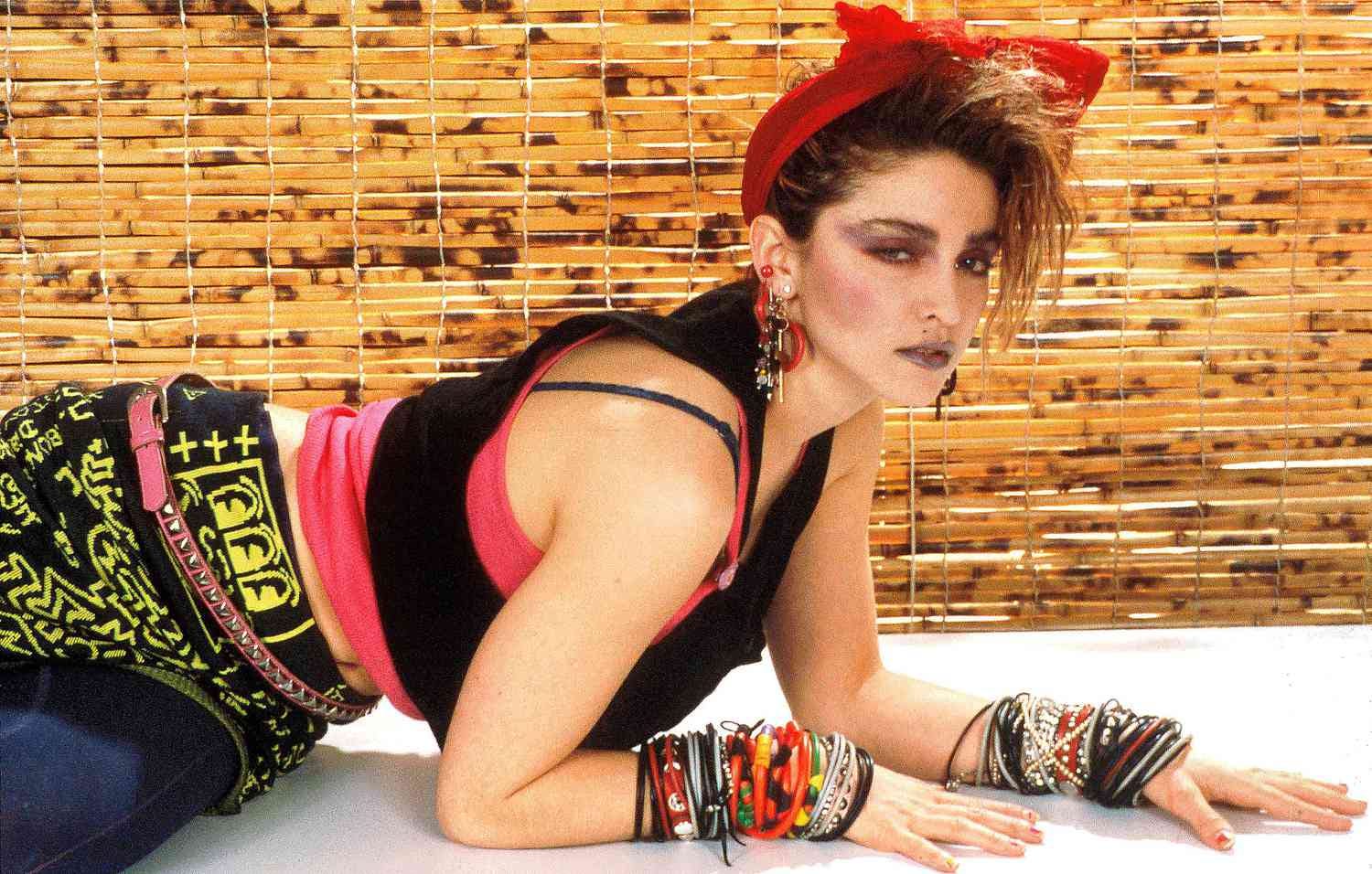
I can’t believe people think of the 1980s as a culturally bad decade. Cinema alone disproves it. There was Cronenberg, Lynch, Greenaway. De Palma made Scarface. Spielberg blurred the line between blockbuster and high art, and James Cameron followed close behind. Action films were made with the formal rigor of arthouse cinema: Rambo, Die Hard, RoboCop all proved that movies powered by guns and blood didn’t have to be stupid. Ridley Scott permanently altered the visual language of science fiction with Blade Runner. Verhoeven moved to Hollywood and collapsed, even further, the boundary between the European avant-garde and the American mass market. Horror was radicalized by Carpenter, Clive Barker, and of course Kubrick, who kicked off the decade by creating The Shining.
Popular music perfected itself with Madonna, Prince, and MJ, turning pop from something you simply became (popular) into a fully articulated aesthetic. POP as an idea.
Synth-pop shoved the Top 40 into genuinely radical territory with OMD, Bronski Beat, the Associates, New Order. Hip-hop was born, inventing an entirely new entertainment industry in real time. Hair metal kept American rock on the charts, for better or worse, but when it came to Guns N’ Roses, who elevated butt rock to a kind of formal elitism, it was unmistakably for the better.
Punk became hardcore (Black Flag and Minor Threat in America, Discharge and Anti-Cimex in Europe) and post-punk (Joy Division, the Fall, PiL, and so many more). Hardcore splintered into a thousand subgenres, from early alt-rock (the Wipers, Hüsker Dü) to early noise rock (Big Black, the Butthole Surfers).
Post-punk jettisoned outward into industrial (Throbbing Gristle, Nurse With Wound), coldwave and goth (Virgin Prunes, Bauhaus), British dream pop like the Smiths and Felt, and later shoegaze with Spacemen 3 and My Bloody Valentine, who reintroduced psychedelics into punk’s bloodstream. Industrial mutated further into power electronics (Whitehouse, Ramleh), early noise (Merzbow, Incapacitants), and even neofolk (Death in June, Current 93). Kraftwerk and disco fed directly into early techno (Juan Atkins, Derrick May) and house.
Metal immediately began accelerating, as with the great Judas Priest, then absorbed the heaviness and ferocity of hardcore to become grindcore (Napalm Death), thrash (Slayer, Sepultura), and even more extreme forms like noisecore (Sore Throat, Fear of God). Motörhead fused Sabbath with punk, inspiring Venom and the first-wave black-metal aesthetic, which led to Celtic Frost, Bathory, and the earliest death-metal bands like Possessed and Incubus, followed later by Obituary and Morbid Angel. Some metal bands, however, insisted the legacy of Sabbath’s slow riffs be preserved, but with the volume and intensity of these newer styles, giving rise to Saint Vitus, Cathedral, and countless others.
Literature was going through growing pains, but mass-market fiction hit its stride, and Stephen King was openly vaunted as a genius. Bret Ellis published his first novel while still a kid. Martin Amis’s success helped spark a renaissance in British writing. William Gibson pioneered an entirely new strain of high-art science fiction. DeLillo’s White Noise preserved the centrality of the American novel by delivering a newly canonized masterpiece.
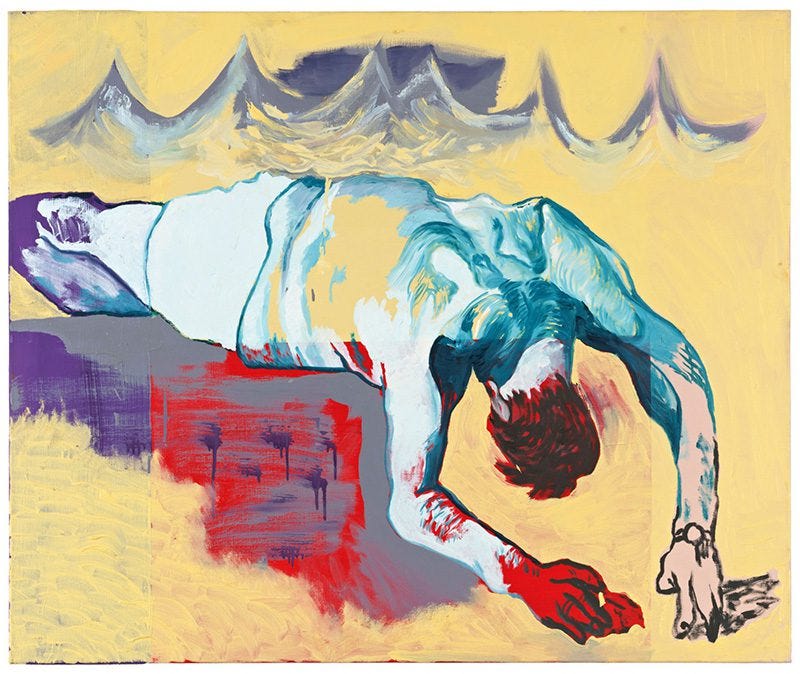
The visual art world exploded, both on the market and with new talent, ushering in postmodernism via Richard Prince, David Salle, and the rest (for better or worse, mostly worse, though no one yet understood just how bad feminism would be for art). Los Angeles became as important as New York with Mike Kelley and Paul McCarthy. Collectors lost their minds for expressionism all over again with Basquiat, Schnabel, and Clemente. Germany emerged as the center of the avant-garde for the first time since Weimar, with Kippenberger and Richter reinventing painting almost at will.
Commercials and advertising began co-opting formally innovative aesthetics as well. Who could forget Apple’s unforgettable 1984 dystopian Super Bowl ad that launched the Mackintosh computer, positioning themselves as the freedom fighters against the Orwellian IBM?
Everything in the 1980s, which I only experienced three years of, was shaped by aesthetics, art, and creation. Perhaps that’s what people actually mean when they say “the eighties sucked.” It isn’t that there was no good culture to enjoy. It’s that this was the era when we became slaves to image, narrative, and sound. Culture was no longer something you sought out; it became the air you breathed. There was no escape from it.
And with that comes a mournful nostalgia attached to the decade, when the imperial West sat at the peak of its power, citizens were getting rich, and for the last time optimism hung palpably in the air.
The 1980s was the most radical decade in modern history. Art mutated rapidly over those ten years, and soon after it would change no more. By the time the internet arrived, we had become so thoroughly captured by images that we lost the ability to think outside them, capable only of endlessly recombining what already lived inside our heads. Regurgitation would soon supplant innovation as the predominant concern of creativity.
The 1980s marked the peak of art and of the West, but it also quietly signaled their imminent downturn and eventual demise.
"for better or worse, mostly worse, though no one yet understood just how bad feminism would be for art)". What a horrible thing to say, you brute.